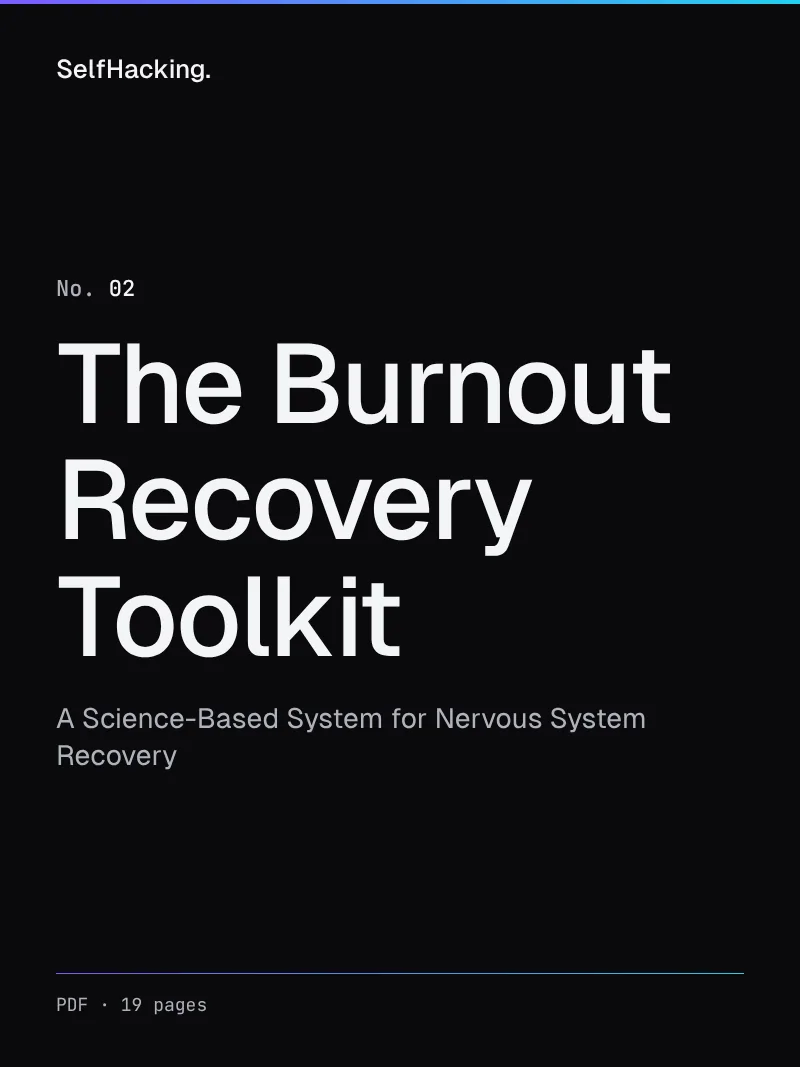
Cover of The Burnout Recovery Toolkit: A science-based system for nervous system recovery

Digital guide

The Burnout Recovery Toolkit

A science-based system for nervous system recovery

$29one-time payment · download after checkout

PDF · 19 pages · about 30 min read · 15 references

Contents

What's inside

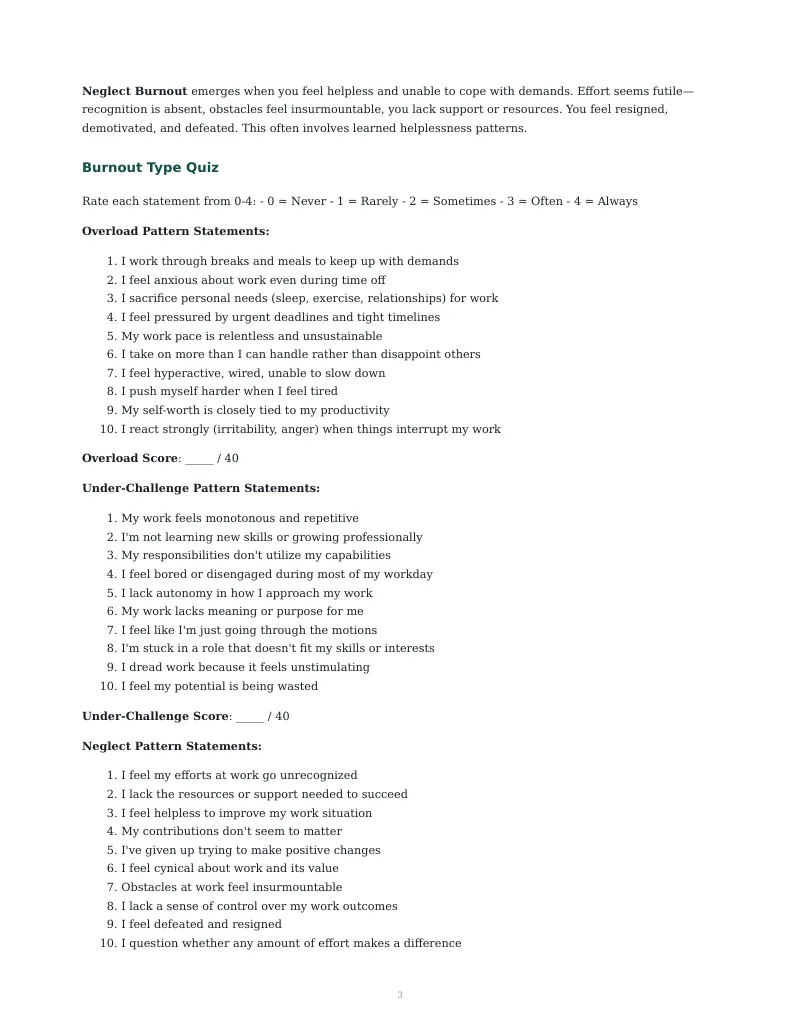
  • Burnout type quiz: 30 statements rated 0-4 across the overload, under-challenge and neglect patterns, each scored out of 40, with score bands from minimal to severe and guidance for mixed patterns (pp. 3-4)
  • Three type-specific recovery protocols, each with its core mechanism, four priority interventions and a recovery timeline from weeks 1-2 to month 3+ (pp. 4-7)
  • Three breathwork protocols — extended exhale, box breathing, physiological sigh — with counts, when to use them and mechanism, plus an eight-week cold exposure progression and a daily 20-30 minute walking protocol (pp. 7-8)
  • Four-supplement stack — ashwagandha KSM-66, rhodiola rosea, phosphatidylserine, magnesium — each with mechanism, cited evidence, dosing, timing, cautions and which burnout type it suits, then a sample stack by type (pp. 8-10)
  • Sleep section: five non-negotiable sleep hygiene rules, a morning and evening sleep protocol, what to do if you can't fall asleep or wake during the night, and when tracking becomes counterproductive (pp. 10-11)
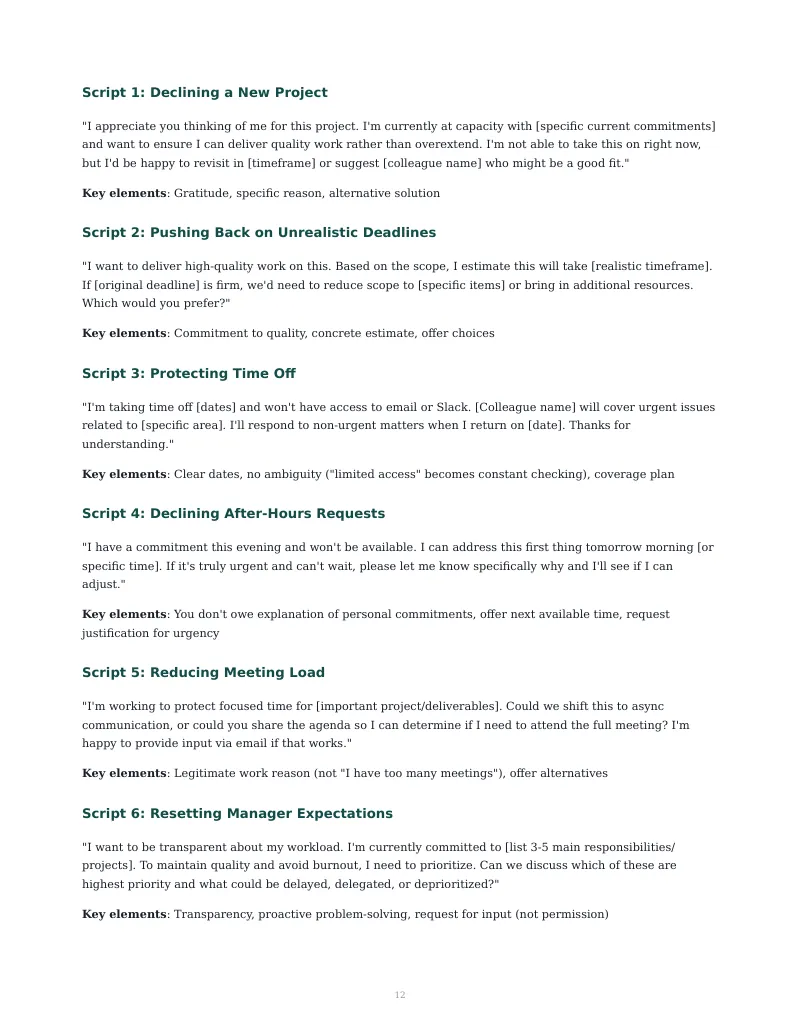
  • Six copy-paste boundary scripts for work — declining a new project, pushing back on deadlines, protecting time off, declining after-hours requests, reducing meeting load, resetting manager expectations — each with its key elements, plus five rules for using them (pp. 11-13)
  • 30-day recovery calendar: weeks 1-4 with primary goals, daily practices, to-do checklists and what to expect, then weeks 5-8 for depth and refinement including a re-take of the quiz in week 7 (pp. 13-14)
  • Relapse warning signs in three categories with a six-step response, and three worksheets: an energy audit table, a stressor inventory table and a weekly review template with a seven-day protocol adherence grid (pp. 15-17)

Table of contents

  1. 01Introduction: Burnout as a Neurological Statep. 1The HPA Axis and Stress Response · Neurobiological Changes in Burnout · Why Recovery Requires Type-Specific Protocols
  2. 02Section 1: Burnout Type Assessmentp. 2Understanding the Three Types · Burnout Type Quiz · Interpreting Your Scores
  3. 03Section 2: Type-Specific Recovery Protocolsp. 4Protocol 1: Overload Burnout Recovery · Protocol 2: Under-Challenge Burnout Recovery · Protocol 3: Neglect Burnout Recovery
  4. 04Section 3: Nervous System Regulation Techniquesp. 7Breathwork Protocols · Cold Exposure Protocol · Walking Protocol
  5. 05Section 4: The Burnout Recovery Supplement Stackp. 81. Ashwagandha (KSM-66) · 2. Rhodiola Rosea · 3. Phosphatidylserine · 4. Magnesium · Sample Stack by Burnout Type
  6. 06Section 5: Sleep and Burnout Recoveryp. 10The Sleep-Burnout Connection · Non-Negotiable Sleep Hygiene · Sleep Optimization Protocol · Sleep Tracking Considerations
  7. 07Section 6: Boundary Scripts for Workp. 11Script 1: Declining a New Project · Script 2: Pushing Back on Unrealistic Deadlines · Script 3: Protecting Time Off · Script 4: Declining After-Hours Requests · Script 5: Reducing Meeting Load · Script 6: Resetting Manager Expectations · Using These Scripts Successfully
  8. 08Section 7: Your 30-Day Recovery Calendarp. 13Week 1: Foundation & Assessment · Week 2: Boundaries & Nervous System · Week 3: Type-Specific Protocols · Week 4: Consolidation · Week 5-8: Depth & Refinement
  9. 09Section 8: Relapse Warning Signsp. 15Behavioral Red Flags · Physical Red Flags · Emotional/Cognitive Red Flags · What to Do When You Notice Relapse Signs
  10. 10Section 9: Recovery Worksheetsp. 16Worksheet 1: Energy Audit · Worksheet 2: Stressor Inventory · Worksheet 3: Weekly Review Template
  11. 11Section 10: Scientific Referencesp. 17
  12. 12Educational Disclaimerp. 18
  13. 13Final Words: Recovery is Not Linearp. 19

Fit

Who it's for

  • You feel simultaneously wired and exhausted and have found that you can't "just power through" it
  • You recognise yourself in one of the three patterns: working relentlessly at the cost of sleep and relationships, going through the motions in work that doesn't use your skills, or feeling that your effort no longer matters
  • Generic stress-management advice hasn't worked for you and you want protocols matched to your burnout type, with the biology behind them explained

Outcomes

What you'll be able to do

  • You will know your primary burnout type — overload, under-challenge or neglect — from a scored quiz, and whether your score is minimal, mild, moderate or severe
  • You will have a recovery protocol for that type with four priority interventions and a week-by-week timeline of what to expect, including the early weeks where you may feel worse
  • You will be able to run three breathwork protocols by the count, progress cold exposure over eight weeks, and dose and time a four-supplement stack knowing each one's cautions
  • You will have six boundary scripts ready to use at work, a 30-day calendar to follow, and three worksheets to audit your energy, map your stressors and review each week
“Burnout isn't laziness, weakness, or a character flaw.”
From the guide, p. 1

Sample pages

Look inside

Page 3 of The Burnout Recovery Toolkit: Burnout type quiz: 30 scored statements
p. 3 · Burnout type quiz: 30 scored statements
Page 12 of The Burnout Recovery Toolkit: Six boundary scripts for work
p. 12 · Six boundary scripts for work

Details

Format and delivery

FormatPDF, 87 KB
Pages19
Reading timeabout 30 min
References15
Opens onAny phone, tablet or computer
DeliveryDownload link on the order confirmation page after payment
Price$29, one-time payment

Not medical advice. The toolkit's own educational disclaimer (p. 18) says it is for educational purposes only and asks you to consult a qualified healthcare provider before implementing any protocol, especially if you have pre-existing medical conditions, take medications, or are pregnant or breastfeeding; it adds that cold exposure requires medical clearance.

Questions

FAQ

How do I find out which burnout type I have?
Section 1 has a quiz: 10 statements for each of the overload, under-challenge and neglect patterns, rated 0-4 and scored out of 40. Your primary type is the highest score; 30-40 is severe, 20-29 moderate, 10-19 mild, 0-9 minimal. If you score high in more than one category the guide calls it compound burnout and says to start with the protocol for your highest-scoring type, then integrate elements from the others.
Which supplements does it recommend?
Four: ashwagandha KSM-66, rhodiola rosea, phosphatidylserine and magnesium, each with mechanism, cited evidence, dosing, timing, cautions and which burnout type it suits. A sample overload stack uses ashwagandha, phosphatidylserine and magnesium glycinate; the under-challenge/neglect stack uses rhodiola and magnesium glycinate, with L-theanine as an option. The guide says supplements support but don't replace lifestyle interventions and tells you to consult your doctor before starting, especially if you take medications.
How long does it take?
Reading it takes about 30 minutes. The calendar runs four weeks, then a weeks 5-8 phase for depth and refinement, and each type's recovery timeline extends to month 3 and beyond. The guide warns that in weeks 1-2 you may feel more tired as you stop overriding fatigue signals, and says that by week 8 you should notice measurable improvements in energy, mood, sleep or stress reactivity; if not, it suggests checking consistency, considering professional support, or asking whether your environment is fundamentally unchangeable. Its disclaimer adds that there are no guarantees: outcomes vary with individual circumstances, consistency of implementation and underlying health status.
Is this a substitute for therapy or medical care?
No. The guide's own disclaimer says it is for educational purposes only and not medical advice, and that burnout recovery may require therapy, medical treatment or workplace intervention beyond self-help protocols. It asks you to consult a healthcare provider before implementing any protocol, says cold exposure requires medical clearance, and advises considering professional support if your highest score is neglect burnout, especially 25 or more.

Articles

Read first

Mental health

Burnout and the Brain: HPA Axis Changes and Recovery Steps

Burnout blunts the cortisol awakening response and alters prefrontal connectivity in imaging studies. Sleep, easy aerobic exercise, CBT and social contact carry the best recovery evidence, and when to seek help.